
Learning Theory
Empowerment is about understanding, caring, participating and acting. What do we know from learning theory about empowering young children in particular, and what didactic principles in general work to empower young children?
Cognitive development
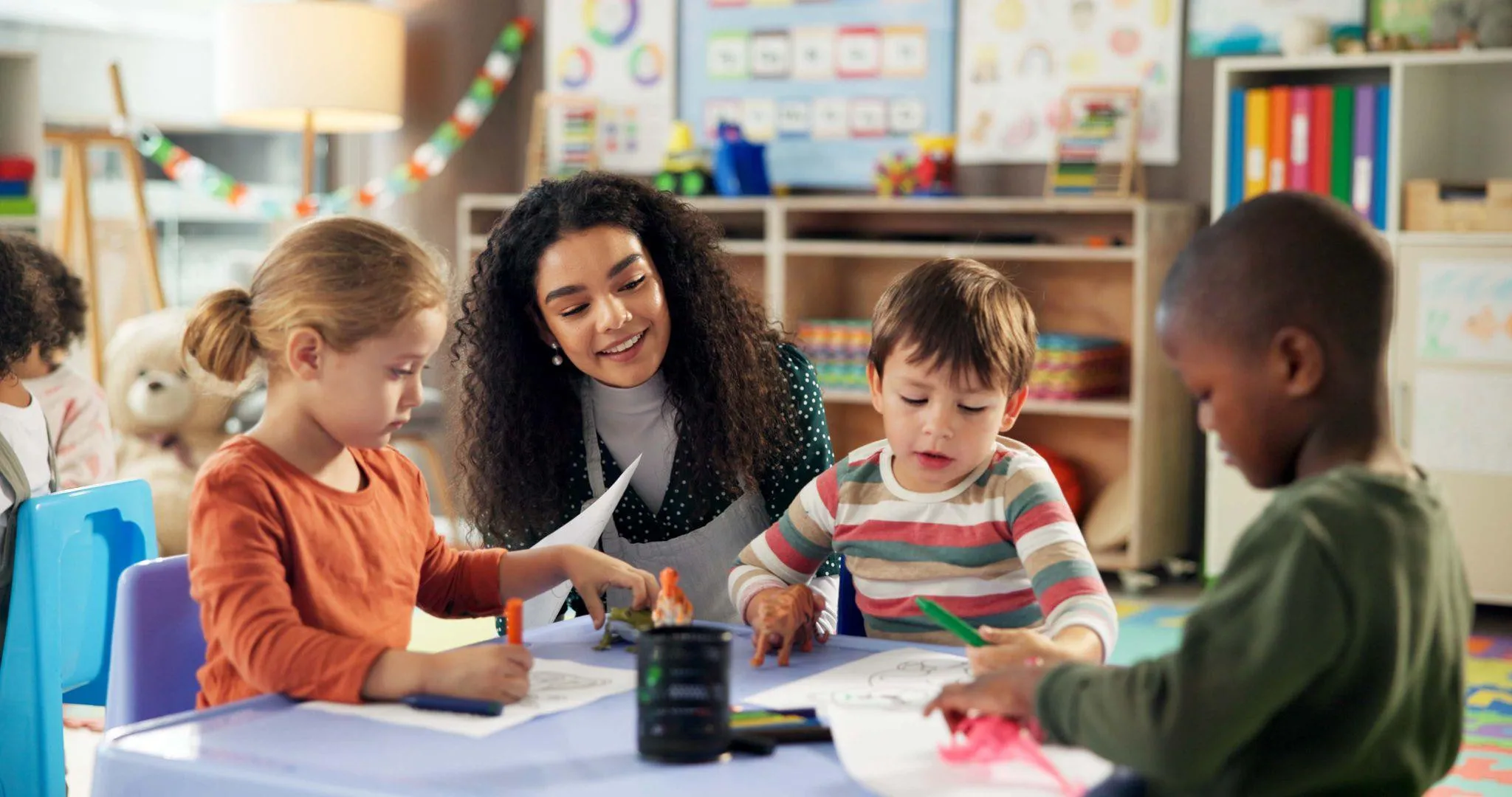
Children from 4–8 years are developing reasoning skills, but they still struggle with abstractions. They are indeed capable of simple reasoning when they are supported to think, compare, and explain. Their attention and working memory is still limited. They benefit from short, varied, sensory-rich experiences that connect to their everyday experiences. Further, autonomy, competence and relatedness are essential for deep engagement, curiosity and persistence.
Pedagogy
In terms of effective pedagogy, activities for 4–8 year olds should use story, play, hands-on exploration and small guided inquiries, encouraging children to collaborate, negotiate and explain, while educators facilitate rather than direct. For global issues, it is important not to overwhelm children. Therefore, it is important to keep the topic close to children’s everyday world, and present it in a way that feels safe rather than frightening. In short, children need a hopeful and practical perspective.
Didactic design principles
What elements in your lesson contribute to empowerment of young children, when addressing global issues? Empowerment can be achieved with regard to heart, head and hands. It depends on the project, situation and place, and many pedagogical strategies can be used. For example, children can feel empowered because…
- Meaningful action — they see their actions lead to visible and meaningful outcomes. So that’s about doing!
- Sensemaking & understanding — they can make sense of complex, real-world problems. So that’s more about knowledge.
- Hope & future orientation — they can imagine positive futures and believe change is possible. So that’s about hope and perspective.
- Relatedness — they feel connected to others and the (natural) world around them. So that’s about feeling part of a whole, feeling you’re not alone in making this a better world.
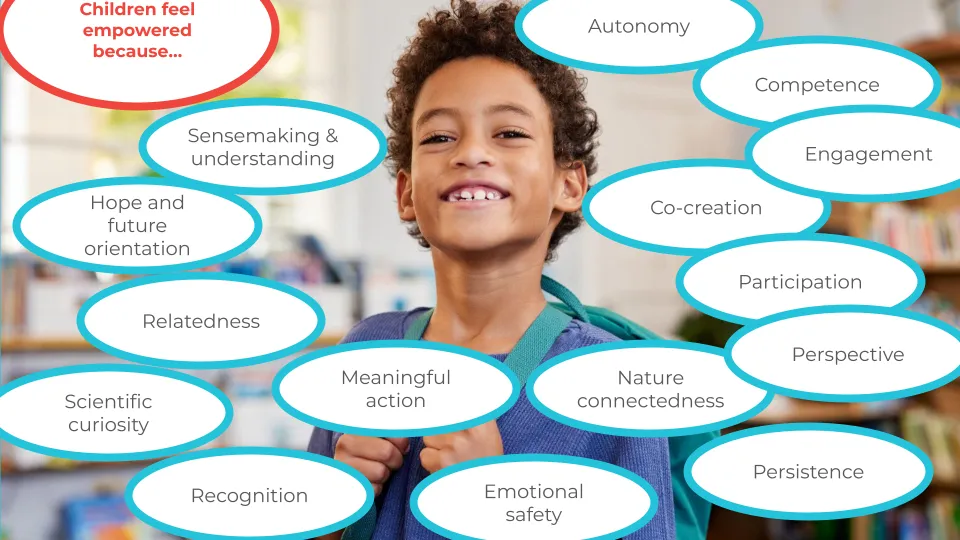
And so many more… We just dived deeper into methodologies on how to empower the young. You can do it in so many ways — more than you initially might think. Hopefully you are inspired already.
Empowering for the chosen topics
Applying this all to climate change, important concepts in hopeful climate change pedagogy are:
- hope in combination with focus on action
- stimulating strong relationships in their social network
- finding a balance between taking action and relaxing
- talking about a sustainable lifestyle and exchanging knowledge and ideas
For global citizenship, the important concepts are: promoting skills such as critical thinking, cooperation, self-reflection and dialogue.
For the topic of the ocean, it is important to highlight that together we are responsible for the wealth of the ocean and that the ocean is very important for our wellbeing.
Read more
- Read the complete ETY literature review about learning theory
- Read more about the impact of climate change on children — UNICEF
- Read more about growing up in times of climate change — NJI report (Dutch only)
- Find out more about the Pedagogy of Hope for global social & environmental justice (link coming soon)
- Learn more about global citizenship — United Nations
- Learn more about global citizenship and the pedagogy of hope
- Discover more didactic principles which foster empowerment with our cards game (coming soon)